Science

Backed by Testing

We’re helping people uncover a better path to health.

Quality is at the heart of everything we do. Our full-time, on-site food scientist personally oversees the testing and verification of every product to ensure it meets our highest standards. From how our premium Muscadine grapes are grown to how Mighty Muscadine® products are produced, we’ve earned the trust of our customers through transparency, care, and science-backed practices.

Every batch of Mighty Muscadine® extract and supplements is rigorously tested for total phenolic content and antioxidant capacity, so you know exactly what you’re getting: consistency, purity, and potency.

All of this happens in our state-of-the-art, 135,000-square-foot manufacturing facility in Mocksville, North Carolina. Equipped with advanced bottling, encapsulating, pressing, labeling, and packing technology, we invest in doing things the right way by never cutting corners, and never compromising on quality.

Our state-of-the-art, 135,000 square foot manufacturing facility located in Mocksville, NC, boasts high-end bottling, encapsulating, pressing, labeling, and packing equipment that spares no expense and takes no short cuts.


Free Radicals

What they are and why you don’t want them!

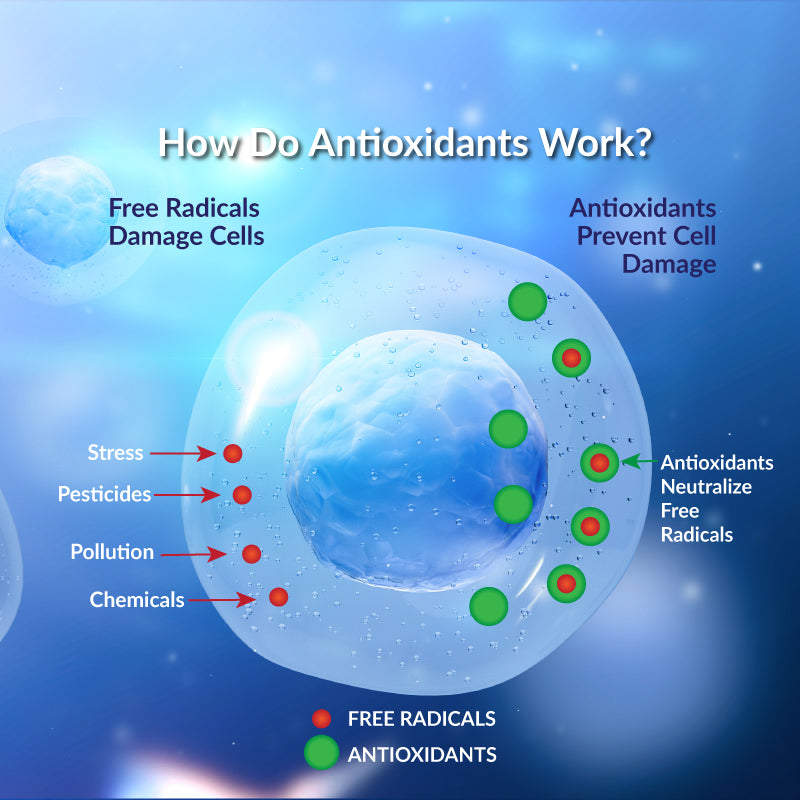
Free radicals are unstable atoms with unpaired electrons, that can damage cells, causing illness and aging.  Free radicals can break down healthy human tissues in a process called oxidation. As the body ages, it loses its ability to fight the effects of free radicals resulting in more free radicals, more oxidative stress, and more damage to cells.

Studies have connected oxidative stress from free radical build up to a number of diseases and signs of aging.

The instability of free radicals can create damage right down to the DNA level. The cells become damaged, and negative effects manifest themselves. For example, if you’re out in the sun too much, you can get oxidative stress in your skin, and that can lead to sun spots or even skin cancer. High blood sugar can cause oxidative stress on the blood vessels, which can lead to heart disease and poor circulation. 

Antioxidant-packed

What is an Antioxidant?

Antioxidants are compounds that help protect the body from oxidative stress. Oxidation is a natural process, but when it gets out of balance, it can damage cells. Antioxidants work by safely interacting with free radicals, helping stop this chain reaction before it affects important molecules in the body.

There are thousands of antioxidants found naturally in the fruits and vegetables we eat. Some foods contain more than others, and no single antioxidant does it all. Each one plays a unique role, supporting different systems in the body to help protect, repair, and maintain healthy cells.

Muscadine grapes stand out because they contain more antioxidants than any other grape or berry. Their thick skins and seeds are especially rich in polyphenols, which is where much of their power comes from.

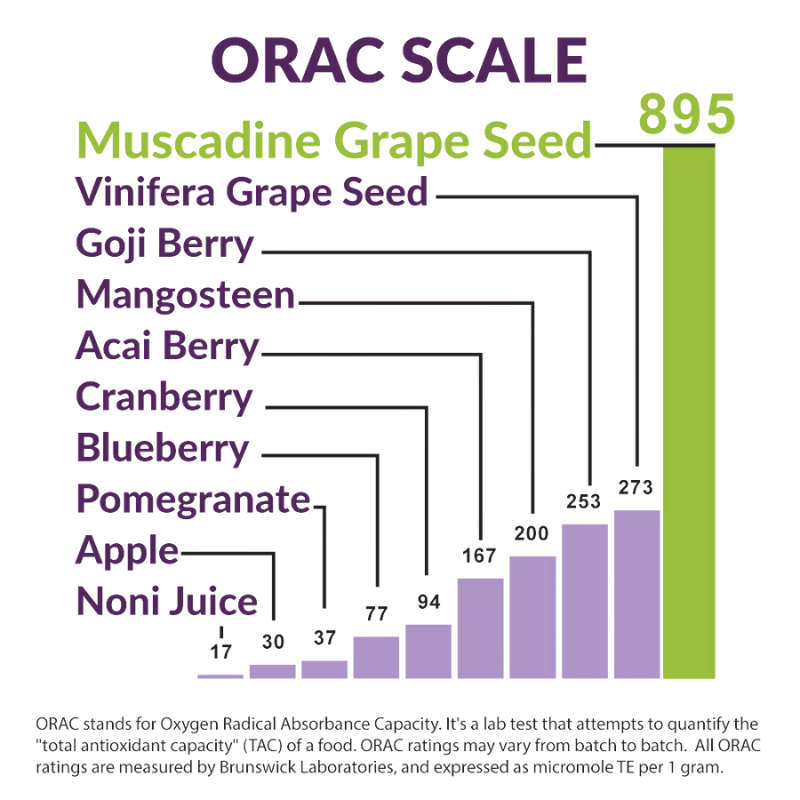
One way antioxidant capacity is measured is through the ORAC scale, which stands for Oxygen Radical Absorbance Capacity (see chart). ORAC is a laboratory method used to compare how effectively different foods can neutralize free radicals. A higher ORAC value indicates a greater antioxidant capacity.

Just a few of the antioxidants found in Muscadines include:

  • Ellagic acid
  • Resveratrol
  • Quercetin,
  • Anthocyanidins
  • OPCs (oligomeric proanthocyanidins)
  • Gallic acid
  • Catechins
  • Kaempferol
  • Myricetin
  • Rutin
  • Ferulic acid...and many more

    Working together to support overall wellness.

The Muscadine Grape

America's First Grape and the Official State Fruit of North Carolina!

Native to the southeastern United States, Muscadine grapes (Vitis rotundifolia) are unlike the grapes you typically find in the grocery store.

Long before European settlers arrived, Muscadine grapes were growing wild throughout the forests of what is now the Southeast. These remarkable grapes survived on their own, thriving through harsh winters and intense summer heat without human intervention or chemical assistance.

Muscadine grapes are known for their thick skins and large seeds, which are exactly what make them so unique. Much of their nutritional value is found in the skin, and the seeds are packed with powerful compounds that contribute to their health-supporting properties.

What truly sets Muscadine grapes apart is their genetics. They contain two more chromosomes than traditional wine or table grapes, giving them a greater natural ability to protect themselves. This unique structure allows Muscadine grapes to naturally resist mold, bacteria, and viruses, without the use of harmful chemicals.

It’s also why Muscadine grapes thrive in the hot, humid climate of the Southeast. Thanks to their extra set of chromosomes, they can grow and flourish in environments where conventional grapes simply cannot.

Similar to our immune system, which produces more antibodies when under attack, the Muscadine grape produces more oxidative damage-fighting antioxidants when under the stress from the environment it grows in, leading to a host of health benefits.